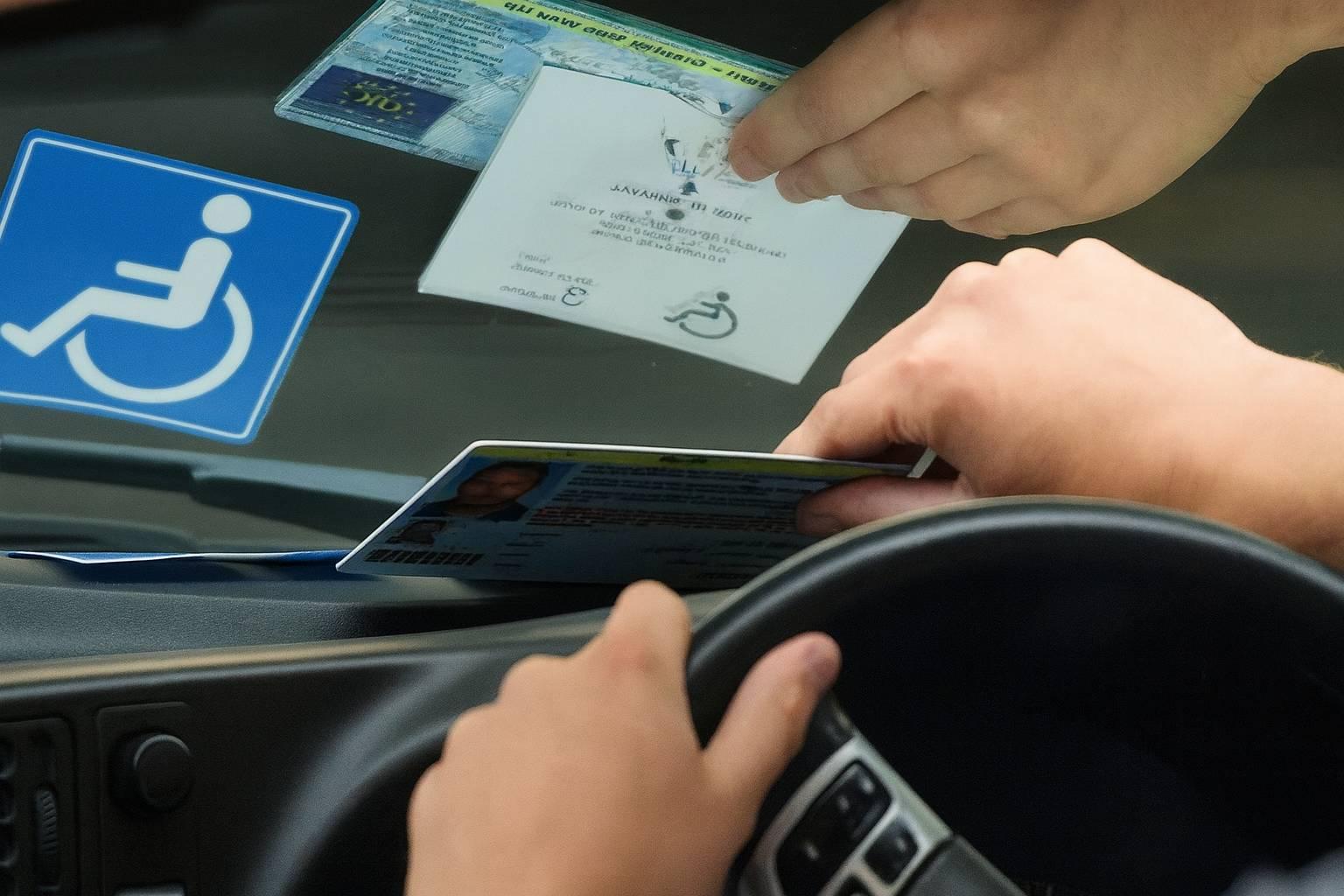
Buying a Blue Badge on Facebook or eBay: The Hidden Legal Trap
In 2026, parking costs have never been higher and the temptation to cut corners has never been greater. But that “Genuine Blue Badge” listed for £200 on Facebook Marketplace is not a parking hack. It is a criminal offence under the Fraud Act 2006, and councils have spent millions building the systems to catch you.
City-centre parking fees in 2026 often feel disproportionate. Low Emission Zone charges are tightening. The pressure on household budgets is real. Against that backdrop, the listings appear: Facebook Marketplace, eBay, and increasingly on encrypted apps like Telegram. “Genuine Blue Badge.” “Registered Permit.” “Parking Hack.” A few hundred pounds.
To the frustrated driver, it looks like a victimless shortcut. To the law, it is a criminal offence under the Fraud Act 2006, and if you are reading this because you have already bought one, or because a council officer seized it from your car today, you need to understand what you are actually facing before you say a single word to anyone.
If you have already been contacted by the council
Do not speak to the council investigation team, attend an interview, or reply in writing before reading this article in full and taking legal advice. Received a letter? Start here.
There Is No Such Thing as a “Spare” Blue Badge for Sale
The first thing every driver must understand: Blue Badges are legally tied to a specific individual or organisation. They are non-transferable. There is no legitimate secondary market.
When you see a listing on Facebook Marketplace for a “Genuine Blue Badge,” it falls into one of three categories, and all three are dangerous for the buyer.
Many badges sold on Facebook Marketplace and Telegram have been taken from the dashboards of genuine disabled badge holders, sometimes by force. Buying one makes you a handler of stolen goods under the Theft Act 1968, which carries its own criminal charge on top of the misuse offence.
Legal exposure: Theft Act 1968, handling stolen goods
Scammers frequently obtain badges belonging to people who have died. Councils now have real-time links between the Blue Badge database and death registration records. The moment an officer enters the serial number, or a camera scans the badge through your windscreen, the system flags the holder as deceased.
Legal exposure: Instant identification + Fraud Act 2006
Some counterfeit badges are visually convincing, including accurate holographic stickers. They lack the internal security features and the unique serial number registered on the national Blue Badge digital database. Officers' handheld devices verify against that database in seconds.
Legal exposure: Fraud Act 2006, fraud by false representation
Why 2026 Is the Year Enforcement Caught Up With the Market
In previous years, buying a badge from a marketplace carried some risk but sporadic enforcement. Those conditions no longer exist. Councils have invested heavily in technology that makes badge verification instantaneous.
Real-time validation
Civil enforcement officers now carry handheld devices that perform live lookups against the national Blue Badge database. The moment an officer enters a badge's serial number, or a camera van scans the badge visible through your windscreen, the system returns the holder's status: valid, expired, reported stolen, or deceased. There is no delay. There is no margin for the story that “I didn't know.”
AI-assisted camera enforcement
Specialist camera vans equipped with ANPR and badge-reading technology now patrol high streets and car parks in major urban areas. These systems can flag a suspicious badge without an officer even being present. A flagged vehicle generates an investigation file automatically. By the time you return to your car, the process may have already started.
National Day of Action coordinations
As reported in the Blue Badge crackdown coverage on this site, councils now coordinate mass enforcement operations, “Days of Action”, with police involvement. Vehicles found displaying purchased or stolen badges during these operations are frequently towed immediately, and drivers are handed a Notice of Intent to Prosecute on the spot.
The Legal Reality: This Is Not a Parking Fine
The most dangerous misconception we encounter is the belief that using a purchased badge, if caught, results in a fine: the same category as a parking ticket or a speeding notice. It does not.
Using a badge you bought on eBay or Facebook is making a false representation to gain a financial advantage, specifically, avoiding parking charges and using a bay reserved for disabled people. That moves the matter out of traffic management and into criminal fraud.
The three charges you could face
| Statute | Maximum | Criminal record? |
|---|---|---|
Fraud by false representation Fraud Act 2006, Section 1 Using a purchased badge is a false representation that you or your passenger is entitled to the parking concession. The dishonesty element is proven the moment you placed a badge you knew was not yours on display. | Up to 10 years' imprisonment | Yes, dishonesty offence, never filtered from Enhanced DBS |
Misuse of a Blue Badge Road Traffic Regulation Act 1984, Section 117 Even where a council does not pursue Fraud Act charges, Section 117 still results in a criminal conviction at Magistrates' Court. It is not a civil penalty notice. | Fine up to £1,000 | Yes, appears on Standard and Enhanced DBS |
Handling stolen goods Theft Act 1968, Section 22 If the badge you purchased was stolen, which many sold online are: you can be charged with handling regardless of whether you knew it was stolen, provided the prosecution can show you had reasonable grounds to suspect. | Up to 14 years' imprisonment | Yes,serious dishonesty offence |
Read more about how Blue Badge misuse crosses into Fraud Act territory and what that means for your record.
The Career Consequences That Dwarf the Fine
For most of the clients who contact us about purchased badge cases, the financial penalty is not the primary concern. The DBS check is.
A Fraud Act conviction is a dishonesty offence. Under the DBS filtering rules, fraud is a listed offence, meaning it is never filtered from an Enhanced DBS certificate, regardless of how much time passes. If you work in a role that requires Enhanced DBS clearance, that conviction will appear on every check for the rest of your working life.
We have seen cases (real cases, handled through this firm) where a purchased badge that saved £20 in parking fees led to:
- GMC or NMC fitness to practise hearings, triggered by the mandatory self-disclosure obligation under professional codes of conduct. Read more about regulatory reporting requirements for the GMC, NMC, and SRA.
- Loss of FCA “Fit and Proper Person” status: a fraud-adjacent conviction renders most FCA-regulated roles untenable.
- Immediate dismissal from teaching posts: the Teaching Regulation Agency treats dishonesty convictions as a breach of the trust the profession requires.
- Impact on US, Canadian, and Australian visa applications: a Fraud Act conviction is a Crime of Moral Turpitude under US immigration law and may make you ineligible for ESTA permanently. Read: Can a Blue Badge conviction affect your US visa or ESTA?
Courts view purchased badge fraud as a particularly serious category of misuse because it is deliberate and because it deprives genuine disabled people of access. Sentencing judges rarely show leniency to professional defendants who, in their view, should have known better. Read our full guide on what a prosecution means for your Enhanced DBS check.
The Interview Under Caution: The Most Dangerous Moment
If you are caught using a purchased badge, you will not simply receive a fine in the post. You will receive an invitation to a PACE interview under caution: a formal criminal interview conducted by council fraud investigators under the Police and Criminal Evidence Act 1984.
Read our full guide to what a Blue Badge interview under caution involves. But the critical point for purchased badge cases is this: the interview is where most people make the problem significantly worse.
People attend alone, believing they can explain their way out. They say:
- “I didn't know it was illegal: I bought it on eBay.”
- “I only used it for ten minutes.”
- “A friend told me it was a legitimate permit.”
- “I thought it was a private parking permit, not a disabled badge.”
In the eyes of the law, these are not defences. They are admissions. By confirming you bought the badge and used it knowingly, you have handed the council the evidence it needs to convict you without anything further.
If you have received an interview invitation, read our guide on what to do when the council makes contact before you respond to anything.
How to Defend a Purchased Badge Case
If you have bought a badge online or been caught using one, the situation is serious, but in many cases it is not hopeless. There are specific legal avenues that can protect your future, but they require professional intervention and they work best before a charge is laid.
Challenging intent
To convict you of fraud, the prosecution must prove you acted dishonestly. If you were genuinely misled, if a sophisticated listing presented the badge as a legitimate private parking permit and there was nothing to indicate it was a disabled badge, there may be a defence based on lack of mens rea (no criminal intent). This defence is narrow and fact-specific, but it exists, and it is worth assessing with a solicitor before assuming a guilty plea is the only route.
Out-of-court settlements
Many councils, particularly those under financial pressure, are willing to resolve Blue Badge cases without court proceedings where the circumstances allow. An out-of-court settlement typically involves returning the badge, paying the council's investigation costs, and accepting a disposal that does not result in a criminal conviction recorded at court.
The key goal is to avoid the criminal conviction entirely. If the matter can be resolved before it reaches the Magistrates' Court, the DBS consequences, the professional disclosure obligations, and the travel visa implications all fall away.
Learn more about whether charges can be dropped or resolved before court.
Mitigation
Where the evidence is strong and a conviction is likely, the strategy shifts to minimising the outcome. A well-prepared mitigation submission (presenting your previous good character, your personal circumstances, the absence of any financial sophistication or planning, and the impact a conviction would have on your career and family) can mean the difference between a conditional discharge and a conviction that follows you for years.
Mitigation presented at the right moment, in the right form, by someone who understands both criminal proceedings and the professional regulatory consequences, is considerably more effective than the same facts raised alone and without preparation. See our guide on available defences and mitigation strategies.
What to Do Right Now
Stop using the badge immediately
If you still have the badge and have not yet been contacted, stop using it now. Every use is a separate potential offence. If contacted, do not use it again under any circumstances.
Do not speak to the council without advice
If the council contacts you by letter, phone, or in person, do not provide an explanation, make admissions, or agree to an interview before you have spoken to a specialist solicitor. Everything you say is evidence.
Do not destroy the badge or listing evidence
Destroying the badge or deleting the listing from which you bought it could constitute interference with evidence. Preserve everything (the badge, the listing screenshots, any messages with the seller) and hand them to your solicitor.
Get specialist advice before the charging decision is made
The council's charging decision has not yet been made in most cases at the point of first contact. The window between initial contact and charge is where specialist intervention makes the greatest difference. Once charged, options narrow significantly.
The Real Cost of a “Cheap” Badge
That £200 listing on Facebook Marketplace is, when you account for all the likely consequences, the most expensive purchase you will ever make. Impound fees if your car is towed. Legal costs to defend the prosecution. A potential Fraud Act conviction that never disappears from an Enhanced DBS check. Loss of professional registration. Visa complications for every overseas trip for the rest of your career.
The sellers know this. They are not selling a parking solution. They are exploiting drivers' frustration and then disappearing, leaving the buyer to face the consequences alone.
If you have been caught in this trap, you have not made a parking error. You have been the victim of a scam that has also made you a suspect in a criminal investigation. The sooner you get specialist advice, the more options remain available.
Frequently Asked Questions
I genuinely didn't know it was a disabled badge: I thought it was a private parking permit. Is that a defence?
Potentially, depending on the specific facts and how the listing was presented. Fraud requires dishonest intent, if the listing was genuinely misleading and there was nothing in the appearance of the badge that should have put you on notice, a lack of mens rea argument may be available. This is highly fact-specific and needs to be assessed by a solicitor who has seen the listing and the specific badge involved.
I reported the seller to eBay/Facebook. Does that help my case?
It demonstrates you were not complicit in the ongoing sale of fraudulent badges, which may be relevant to how the case is presented. But it does not undo the offence of using the badge yourself. The two matters are separate.
The badge I bought turned out to be stolen. Can I be charged for handling stolen goods even though I didn't know?
The Theft Act 1968 requires that you knew or believed the goods were stolen, or that you had no reasonable grounds to believe they were legitimately sold. Buying a Blue Badge from an informal online marketplace at a fraction of its “value” may be difficult to present as a reasonable good-faith transaction. However, the strength of a handling charge depends on specific evidence: it is not automatic.
Can I miss the interview they've invited me to?
You are not legally required to attend a voluntary PACE interview. But not attending without any engagement allows the council to proceed on the evidence it holds, and can result in a prosecution decision without you having had any opportunity to provide context. The better approach is to instruct a solicitor who can respond to the invitation on your behalf. Read our guide on Blue Badge interviews under caution.
If I'm convicted, will it definitely show on my DBS check?
Yes. A Fraud Act conviction is a listed offence and is never filtered from an Enhanced DBS check. A Section 117 RTRA conviction will appear on Standard and Enhanced checks for the relevant disclosure period (11 years for a conviction without a custodial sentence, if no other offences). For a full breakdown, read our guide on Enhanced DBS check consequences.
Related guides
- When does Blue Badge misuse become fraud?
- Will a conviction show on my Enhanced DBS check?
- Regulatory reporting: GMC, NMC and SRA obligations
- Can a conviction affect your US visa or ESTA?
- Blue Badge interview under caution, full guide
- Can Blue Badge misuse charges be dropped?
- Received a Blue Badge misuse letter: what to do next
Urgent
Caught with a purchased badge?
Do not speak to the council or attend an interview before taking advice. The window to influence the charging decision is short.
Free Discovery CallThe real cost breakdown
Unsure of your risk level?
Our free calculator gives an instant assessment based on your specific circumstances.
Take the Risk CalculatorKey guides
This article is for general information only and does not constitute legal advice. Always seek specialist legal advice for your specific situation before responding to the council or attending any interview.
Get Your Free Discovery Call
If you have bought a Blue Badge online, been caught using one, or received a letter from the council, speak to a specialist before you say anything.