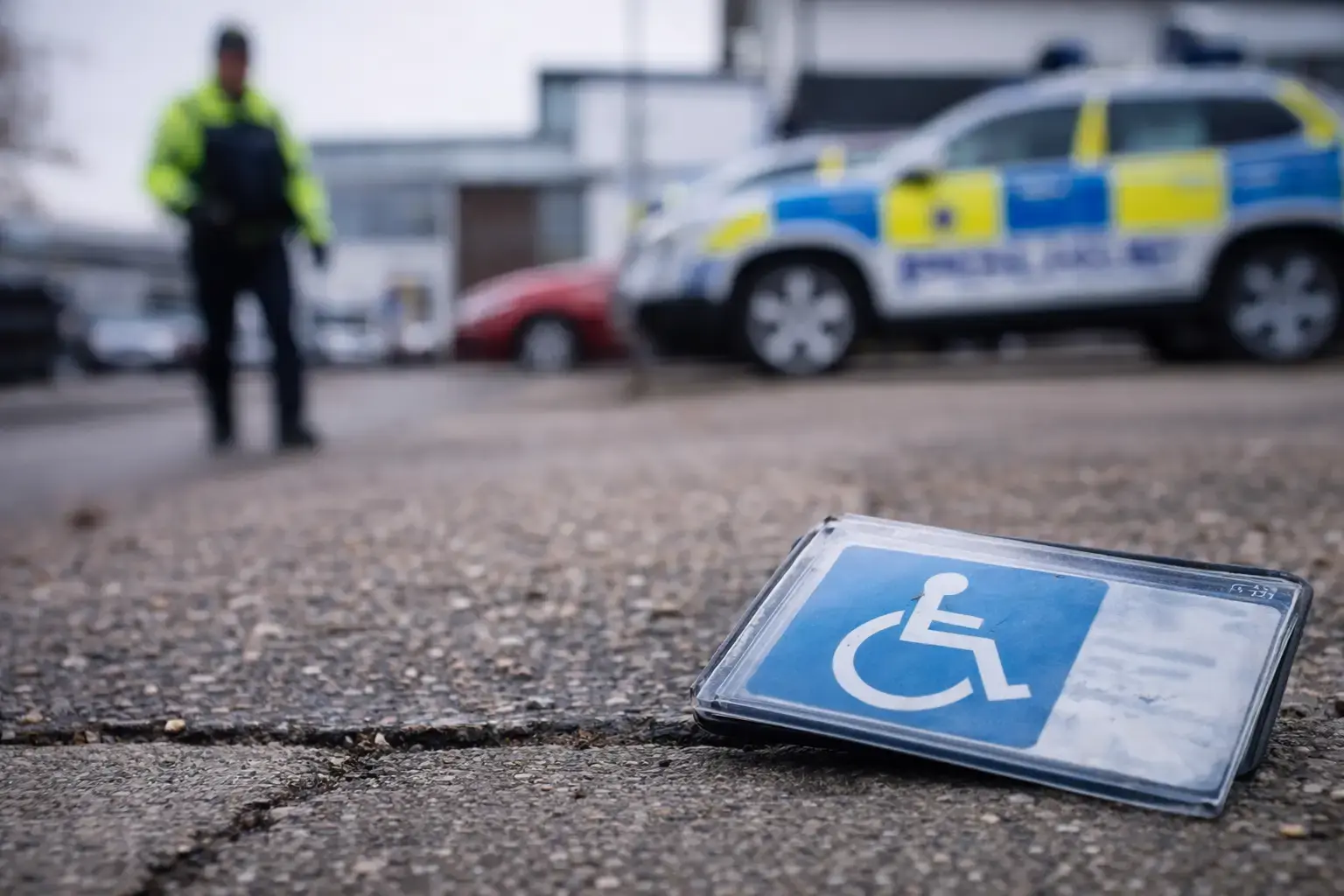
Can You Be Prosecuted for Using a Found Blue Badge?
Can You Be Prosecuted for Using a Found Blue Badge?
It happens more often than people admit.
You notice a Blue Badge lying in a car park or on the pavement. You realise it would let you park close to a shop, hospital or station. You tell yourself it’s temporary. You’re not stealing: you just found it.
Under UK law, that decision can lead to a criminal investigation.
A Blue Badge is not just a parking permit. It is a government-issued concession intended only for a specific disabled person. Using a found badge is usually treated as dishonest use of an official document and can amount to fraud.
This guide explains what the law says, what usually happens if you are caught, and what you should do if you have found one.
What Is a Blue Badge?
The Blue Badge scheme allows people with serious mobility difficulties to park closer to their destination. It is administered by local councils under Department for Transport guidance and originates from the Chronically Sick and Disabled Persons Act 1970.
The badge allows concessions such as:
- parking in disabled bays
- parking on certain yellow lines for limited periods
- parking in restricted streets where others cannot
However, the badge belongs to a named individual, not a vehicle and not a family. It may only be used when that person is travelling in the vehicle.
Because the badge gives legal parking privileges, misuse is treated far more seriously than an ordinary parking mistake.
If You Find a Blue Badge: Your Legal Responsibilities
Finding a Blue Badge creates a legal obligation. It is treated as lost property that clearly belongs to an identifiable owner.
You are expected to take reasonable steps to return it. In practice, that means you should do one of the following as soon as possible:
- hand it to a police station
- contact the issuing local council
- return it directly if the owner can be identified
Keeping it, even temporarily, can create legal problems. Using it almost always will.
The law does not require perfect effort to trace the owner, but it does require honest behaviour. Holding onto it “just in case you need parking” is usually viewed as dishonest retention.
Why Using It Becomes a Criminal Offence
Many people assume the worst that can happen is a parking ticket. That is not usually how councils treat these cases.
When you display a found badge to obtain a parking benefit, you are representing that the disabled badge holder is present and entitled to the space. Because you know that is untrue, authorities may treat it as fraud under the Fraud Act 2006.
In simple terms: you obtained a benefit you were not entitled to by making a false representation.
This is why these cases often move beyond parking enforcement and into formal investigation.
How People Get Caught
Blue Badge misuse is regularly detected. Enforcement officers are trained to check badges carefully, particularly in supermarkets, hospitals and busy town centres.
Common checks include:
- comparing the badge photograph to the driver or passenger
- asking where the badge holder is
- checking expiry dates and holograms
- verifying the badge with council records
If the holder cannot be identified, the badge is often confiscated and the matter reported for investigation.
Possible Penalties
The consequences depend on what investigators believe you intended. However, outcomes commonly include both parking enforcement and criminal proceedings.
| Outcome | Typical Result |
|---|---|
| Parking enforcement | Penalty charge notice, clamping or towing |
| Council investigation | Interview under caution |
| Prosecution | Magistrates' Court proceedings |
| Conviction | Fine (often several hundred pounds) and criminal record |
Courts can impose fines up to £1,000 for badge misuse offences. Where fraud is proven, penalties can be higher.
Criminal Record Consequences
This is the part many people do not expect.
Blue Badge fraud is treated as a dishonesty offence. A conviction can appear on background checks and may affect:
- employment applications
- taxi and private hire licensing
- security-cleared jobs
- volunteering roles
For many people, the long-term record causes more problems than the fine.
Is Keeping the Badge Without Using It Illegal?
Usually, possession alone is not prosecuted immediately. However, if you keep the badge and make no attempt to return it, investigators may view this as evidence of dishonest intent.
The risk increases significantly the moment the badge is displayed in a vehicle.
Possible Defences
There are limited defences, but they depend heavily on evidence and early legal advice.
Situations that sometimes help include:
- immediate attempts to return the badge
- genuine belief it belonged to a passenger present
- very brief possession followed by prompt reporting
Simply saying you “did not know the rules” rarely succeeds. Courts consider it obvious that a disabled permit cannot be used by someone else.
What You Should Do Now
If you have found a Blue Badge, do not use it.
Contact the issuing council or hand it to a police station. Returning it promptly almost always prevents further action. Using it, even once, creates a real risk of investigation.
Frequently Asked Questions
Can I use it just once?
No. Even a single use can be treated as fraud because the parking benefit was obtained dishonestly.
What if I was only parked for a few minutes?
The duration does not matter. The offence is the false representation, not how long you parked.
Will I automatically go to court?
Not always, but many councils investigate and some cases are prosecuted, particularly where the use appears deliberate.
What should I do immediately after finding one?
Return it to the local council or a police station as soon as possible.
Can CCTV detect it?
Yes. Officers frequently identify misuse through direct inspection and routine patrol checks.
Need Help with a Blue Badge Misuse or Fraud Allegation?
If you've been accused of Blue Badge misuse or need legal advice, don't wait, time is critical. Contact us today and we will put you in touch with an expert Blue Badge Case solicitors, for a free initial discovery call.
Get a Free Blue Badge Legal Discovery CallDon't risk fines or penalties, let us help you understand your rights and responsibilities under the Blue Badge scheme.

Cara Sheehan
Legal Expert